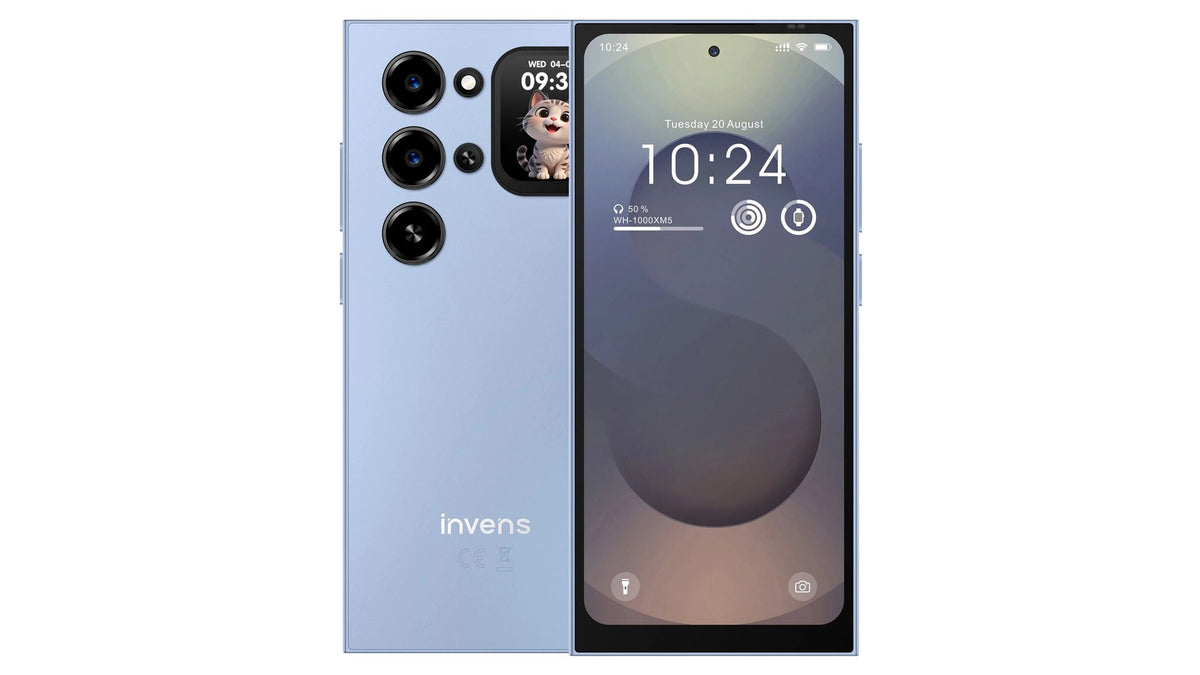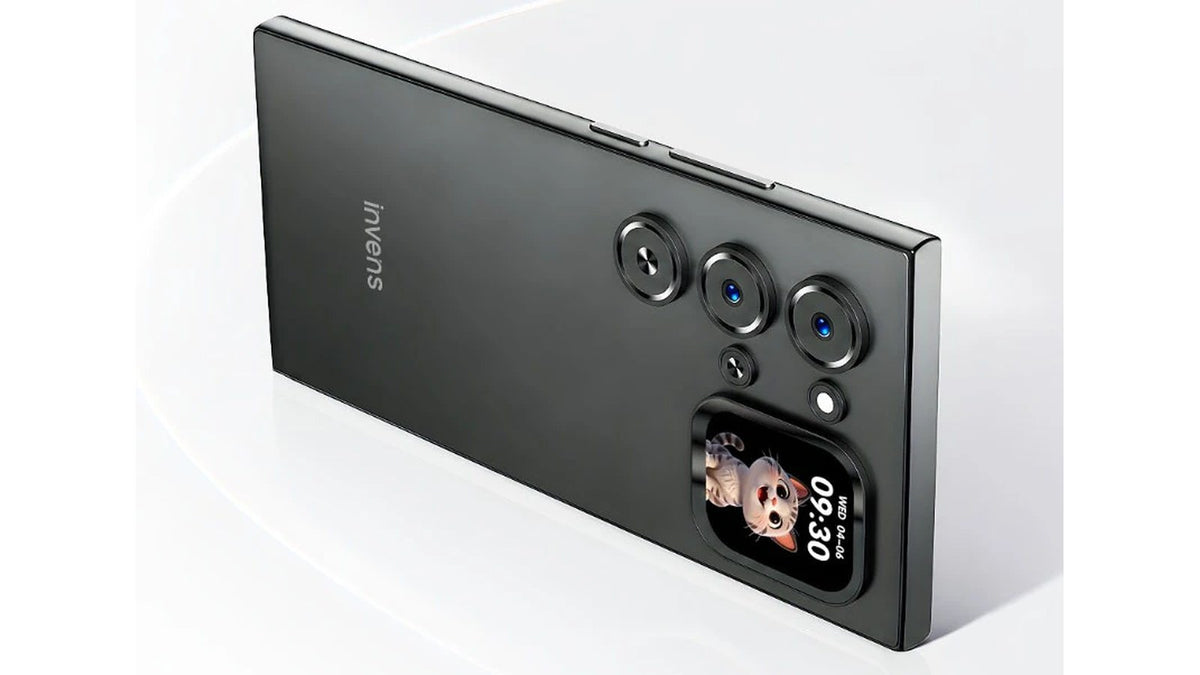
NetCost & Security, the French consumer technology outlet, published its coverage of the invens Ultra S26 on 20 October. The article centres on the phone's rear display and its 120Hz panel, and it lands alongside the phone's wider European release.
Rather than working through a list of specifications, the piece is organised around the two things that make the Ultra S26 recognisable at arm's length: a second display on the back, and a 120Hz panel on the front.
What the article focuses on
The review opens with the design decision that shapes everything else — the Ultra S26 carries a 1.75-inch secondary display on its rear panel. That panel is not a notification blinker. It is a working screen, and the article treats it as the phone's defining interface choice rather than an accessory.
The second subject is the main display: a 6.79-inch panel running at 120Hz, which puts the Ultra S26 in the same refresh-rate bracket as phones that cost several times more. For a device positioned in the entry-to-mid segment, that combination — a large high-refresh screen plus a second screen on the back — is the argument the article spends its space on.
What a second screen is actually for
The rear panel exists for the interactions that do not deserve the whole phone:
- Notifications at a glance — messages, calls and app alerts surface on the back without waking the main display.
- Playback controls — track skipping and volume while the phone lies face down.
- Camera framing — the rear screen becomes a viewfinder for selfies and group shots taken with the 32MP main camera, which is a better sensor than the front-facing one.
The logic is straightforward: most phone pickups last a few seconds. Splitting those few seconds onto a smaller, always-available surface keeps the 6.79-inch 120Hz panel free for reading, video and games — the tasks that actually benefit from size and refresh rate.
Ultra S26 specifications
| Specification | Ultra S26 |
|---|---|
| Main display | 6.79-inch, 120Hz |
| Secondary display | 1.75-inch, rear panel |
| Memory | 4GB RAM + 20GB virtual RAM |
| Storage | 128GB |
| Rear camera | 32MP |
| Front camera | 13MP |
| Operating system | Android 16 |
| Network | 4G |
| Colours | Black, Blue, Gold, Taupe |
Where it sits against the Ultra S25
The Ultra S26 is the second generation of the dual-screen idea. Compared with the Ultra S25, the upgrades concentrate on the display, the memory configuration and the cameras:
| Ultra S26 | Ultra S25 | |
|---|---|---|
| Main display | 6.79-inch, 120Hz + 1.75-inch rear panel | 6.79-inch, punch-hole |
| Memory | 4GB + 20GB virtual | 4GB + 20GB virtual |
| Storage | 128GB | 64GB |
| Rear camera | 32MP | 16MP |
| Front camera | 13MP | 8MP |
| Colours | Black, Blue, Gold, Taupe | Black, Purple, Gold |
Availability
The Ultra S26 is available in the four colourways listed above and ships with 128GB of storage as standard — no separate higher-capacity tier to choose between.
Read the original article at NetCost & Security (in French).
Read next
- Ultra S26 launches in Europe — the full launch announcement.
- Unboxing the Ultra S26 — what ships in the retail box.
- Why the Ultra S26 has a second screen — the thinking behind the rear display.